PRJ_014 // GAME_DESIGN

Age of War Card Game

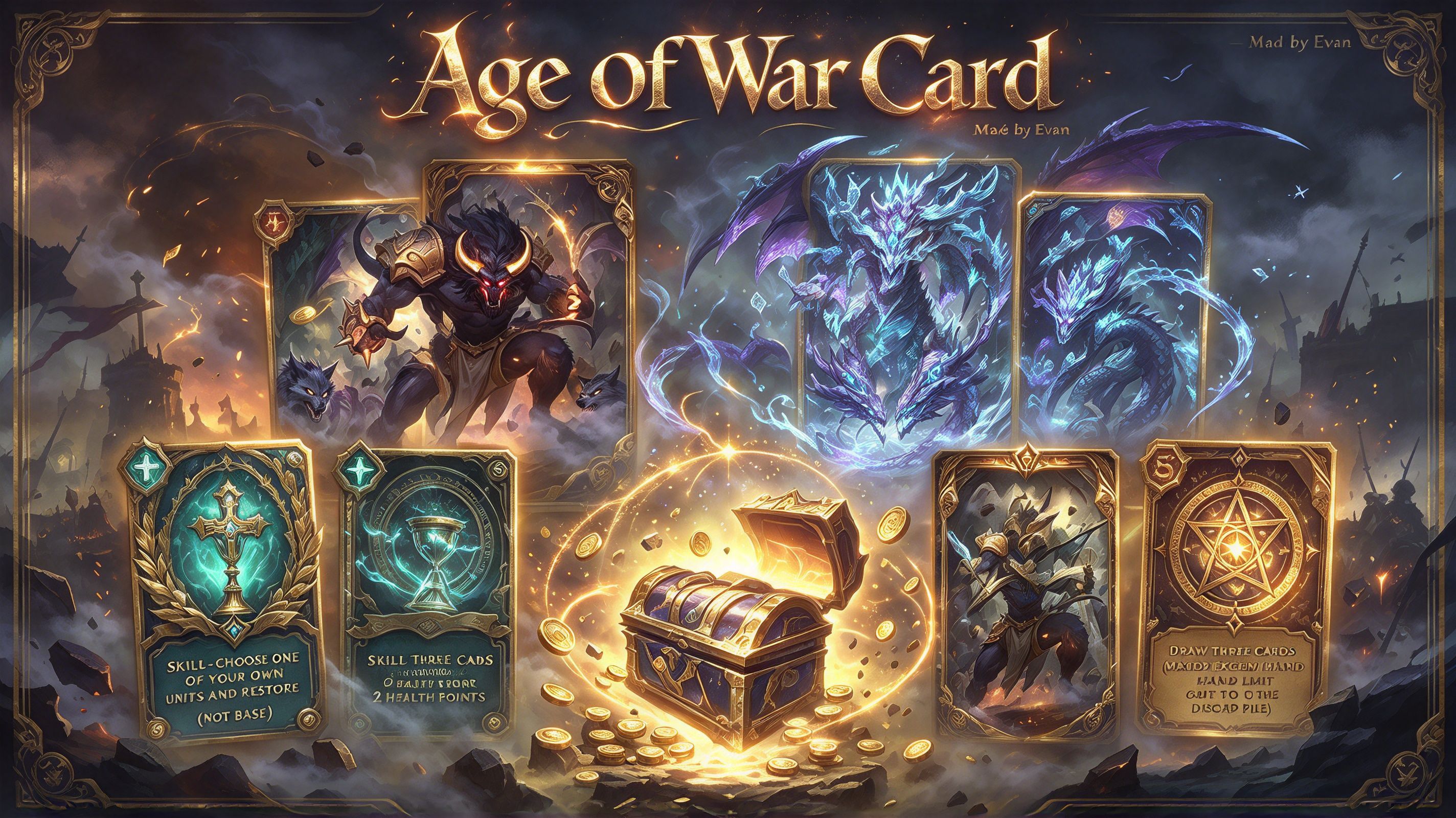
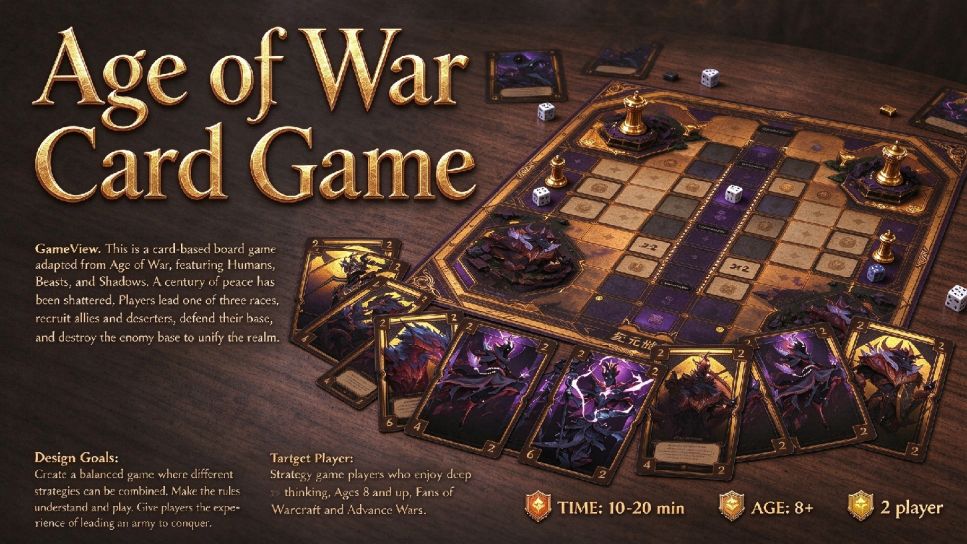
A card-based board game adapted from Age of War. Lead one of three races, recruit allies and deserters, defend your base, and destroy the enemy base to unify the realm.

Card Game Board Game Strategy Fantasy
Age of War Card Game Board

Overview

Age of War Card Game Overview

Age of War Card Game is a strategic card-based board game that continues the world of War of the Ages. After a century of peace, the realm is shattered. Players take command of one of three distinct races—Human, Beast, or Shadow—and must recruit allies and deserters, defend their base, and destroy the enemy base to unify the realm.

This project transforms the video game world into a tactile tabletop experience, designed for strategy enthusiasts who enjoy deep thinking and tactical decision-making.
GameView

This is a card-based board game adapted from the Age of War universe, featuring Humans, Beasts, and Shadows as playable factions. A century of peace has been shattered, and players must lead their chosen race to victory.

Players recruit allies and deserters, defend their base, and destroy the enemy base to unify the realm. The game combines tactical map movement with deck-building elements for a fast-paced card battle experience.

Inspiration

Age of War Card Game Inspiration and References

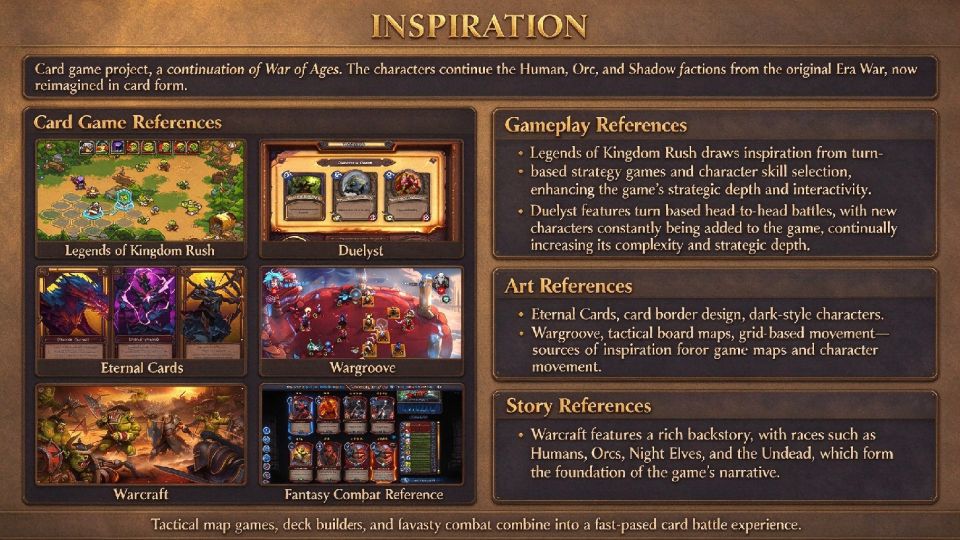
This card game project is a continuation of War of the Ages. The characters continue the Human, Orc, and Shadow factions from the original Era War, now reimagined in card form.

🎴

Card Game References

Legends of Kingdom Rush, Duelyst, Eternal Cards, Wargroove, Warcraft, and Fantasy Combat Reference inspire the card mechanics and visual design.

⚔

Gameplay References

Legends of Kingdom Rush draws inspiration from turn-based strategy games and character skill selection. Duelyst features turn-based head-to-head battles with constantly added characters.

🎨

Art References

Eternal Cards inspires the card border design and dark-style characters. Wargroove provides tactical board maps and grid-based movement systems.

📖

Story References

Warcraft features a rich backstory with races such as Humans, Orcs, Night Elves, and the Undead, which form the foundation of the game's narrative.

Factions & Unit Cards

Age of War Card Game Factions and Unit Cards

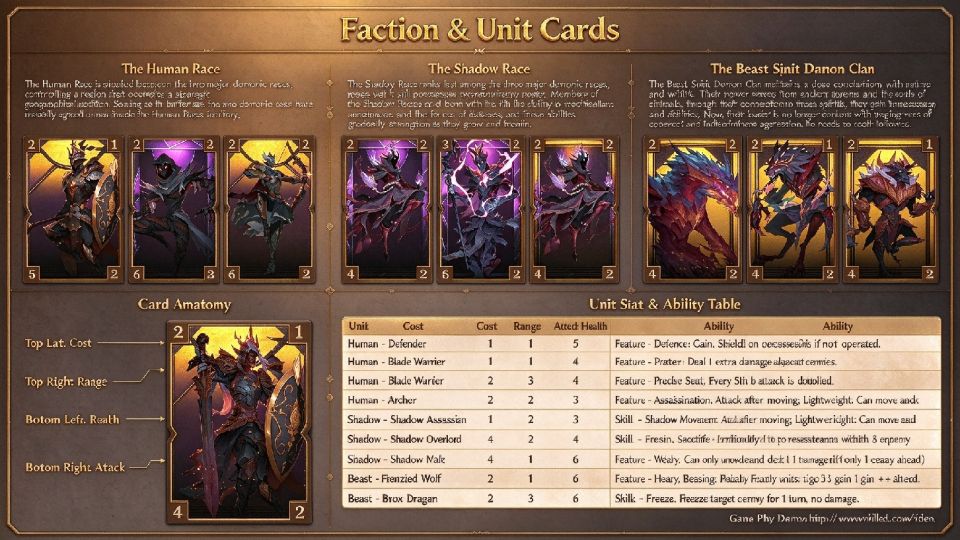
The game features three distinct races, each with unique units, abilities, and strategic playstyles:

🛡

The Human Race

A balanced faction with versatile units. The Human Race excels in strategic positioning and defensive tactics, making them ideal for players who prefer methodical gameplay.

🌑

The Shadow Race

A dark faction specializing in stealth and assassination. Shadow units can move unseen and strike from the darkness, perfect for players who enjoy surprise attacks.

🐺

The Beast Race — Sinit Danon Clan

A fierce faction of powerful creatures. Beast units boast high attack power and raw strength, designed for aggressive players who favor overwhelming force.

Card Anatomy: Each unit card features four key stats—Top Left: Cost, Top Right: Range, Bottom Left: Health, Bottom Right: Attack. Understanding these stats is essential for building effective strategies.

How to Play

Age of War Card Game How to Play

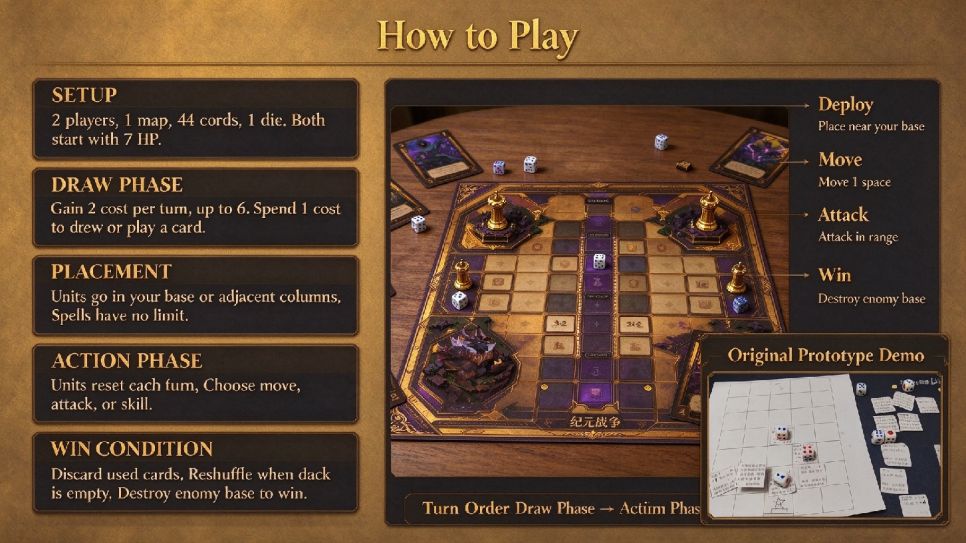
The game follows a structured turn-based flow with clear phases and objectives:

🎯

Setup

2 players, 1 map, 44 cards, 1 die. Both players start with 7 HP (base health).

🃏

Draw Phase

Gain 2 cost per turn, up to a maximum of 6. Spend 1 cost to draw a card or play a card from your hand.

📍

Placement

Units can be placed in your base or adjacent columns. Spells have no placement limit and can be played anywhere.

⚔

Action Phase

Units reset each turn. Choose to move, attack, or use a special skill. Tactical positioning is key to victory.

🏆

Win Condition

Discard used cards. Reshuffle when the deck is empty. Destroy the enemy base to win the game.

Core Actions: Deploy units near your base → Move 1 space per turn → Attack enemies within range → Destroy the enemy base to achieve victory.

Design Goals

The design philosophy behind Age of War Card Game focuses on creating a deep yet accessible strategy experience:

⚖

Balanced Gameplay

Create a balanced game where different strategies can be combined. No single faction or tactic dominates, encouraging creative deck building.

📜

Accessible Rules

Make the rules easy to understand and play. The game is designed for ages 8 and up, with intuitive mechanics that teach strategy through play.

👑

Command Experience

Give players the experience of leading an army to conquer. Every decision matters—from unit placement to resource management to tactical timing.

Development Journey

This card game project represents the evolution of the War of the Ages universe from digital to physical form. The design process involved extensive playtesting, balancing three unique factions, and crafting a ruleset that captures the epic feel of the original game in a compact tabletop format.

Tabletop Design 3 Factions 44 Cards 2 Players

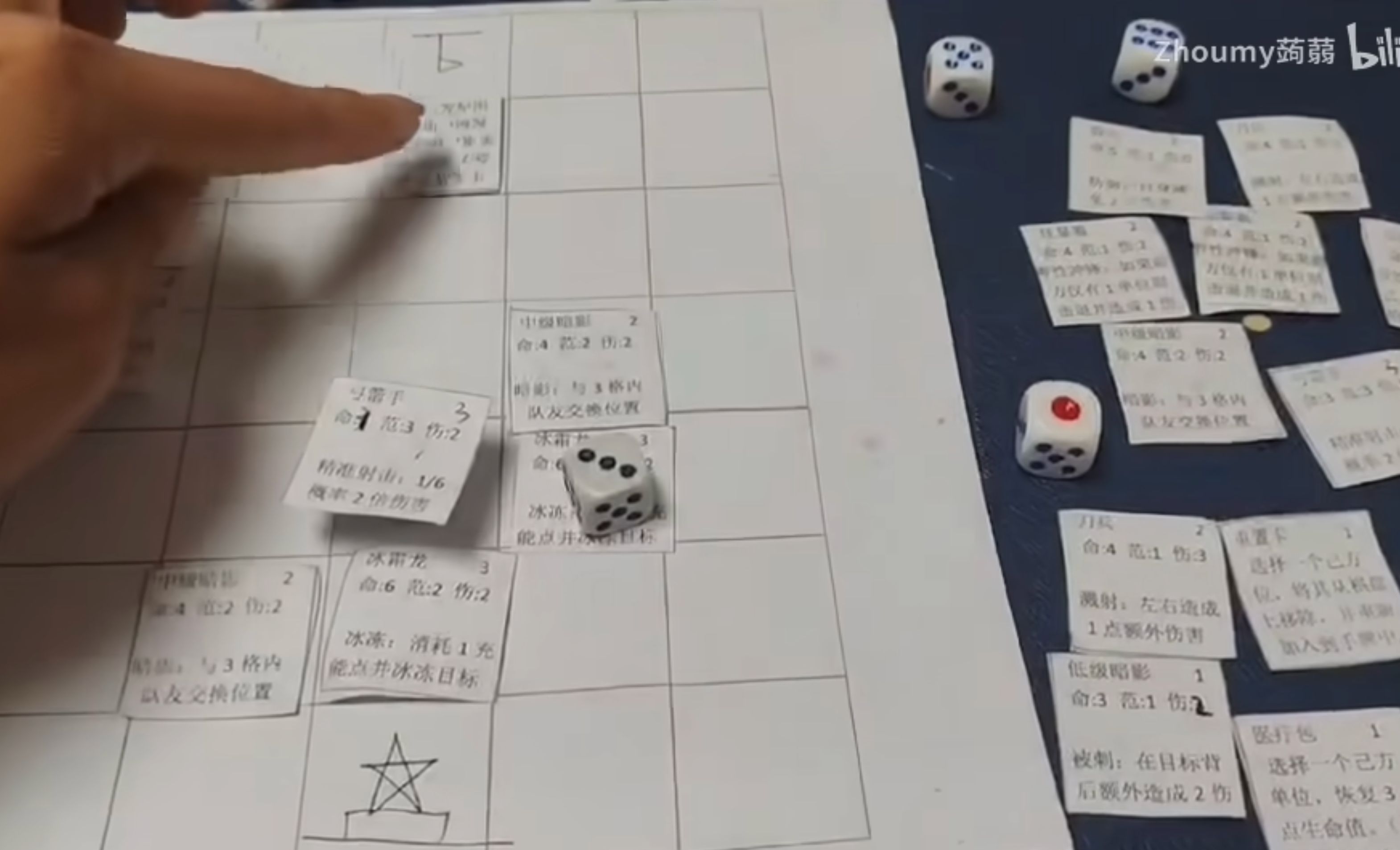
Paper Test

Age of War Card Game Paper Test

Online Simulation & Balancing

Age of War Card Game How to Play

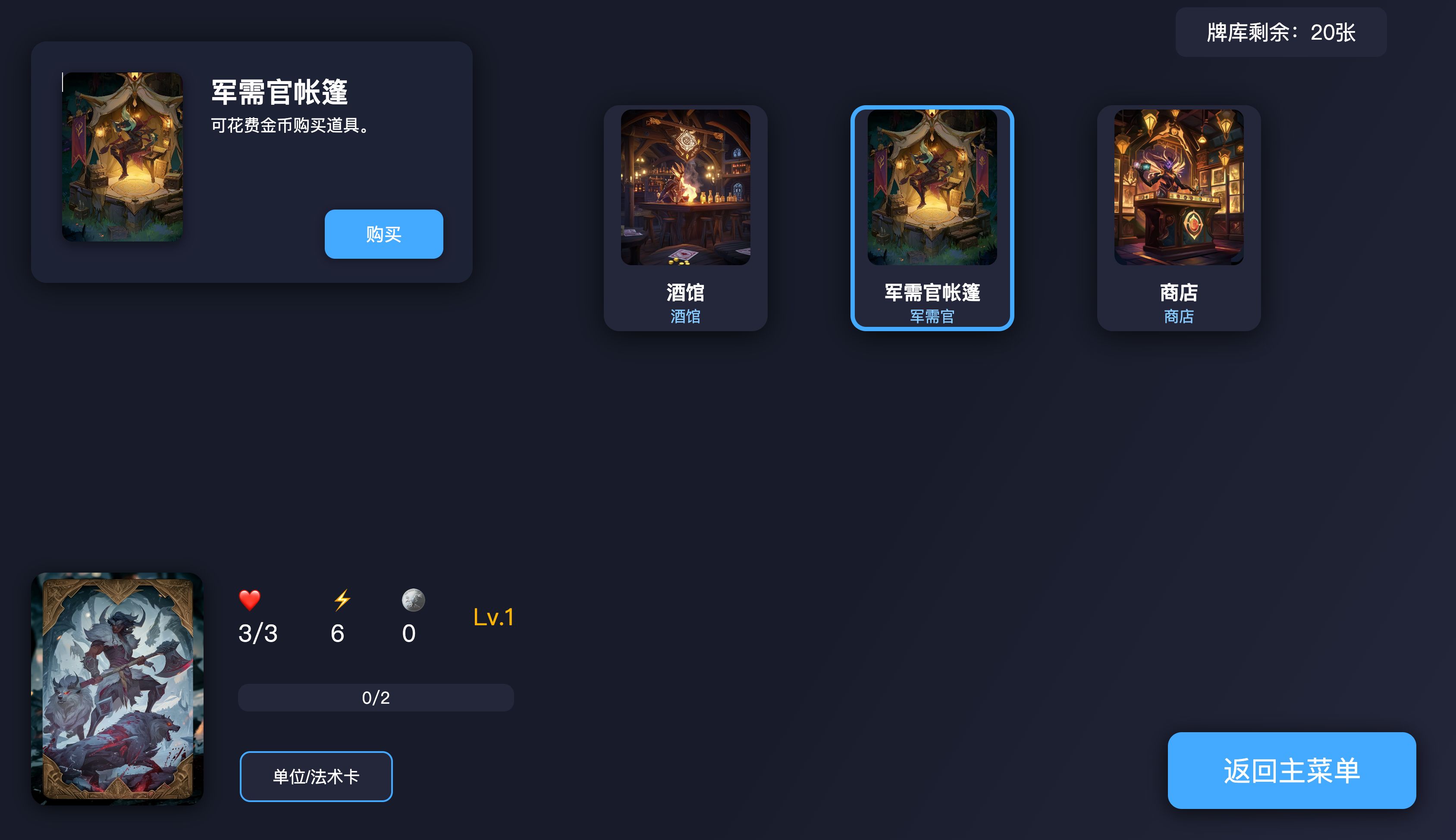
To validate the card game before committing to a full physical production, a digital online simulation was built alongside the tabletop version. The simulator recreates the full ruleset—cost, draw, placement, movement, combat, and win conditions—so the game could be tested rapidly and repeatedly without printing a single card.

It served two purposes: playtesting playability, and tuning the design numbers behind the three factions.

🖥

Digital Prototype

A playable online version of the card game that mirrors the physical rules, allowing 2 players (or AI opponents) to run full matches remotely and iterate far faster than paper testing.

🧪

Playability Testing

Rapid sessions verified that the turn flow, card placement, and mask-free combat loop were understandable and fun, catching confusing rules and dead turns early.

📊

Number Balancing

Repeated simulated matches were used to tune key values—unit Cost, Range, Health and Attack, cost gain per turn, and base HP—so no faction or card dominated and every strategy stayed viable.

🔁

Fast Iteration Loop

Adjust values in the simulator, run dozens of games, compare win rates across Human, Beast, and Shadow, then lock the changes into the physical rules. This loop shaped the final balanced ruleset.

Outcome: The simulation proved the core loop was solid and gave concrete data for balancing the three factions, resulting in the finished 44-card, 2-player ruleset.