PRJ_008 // WEB_APP

CantoGo

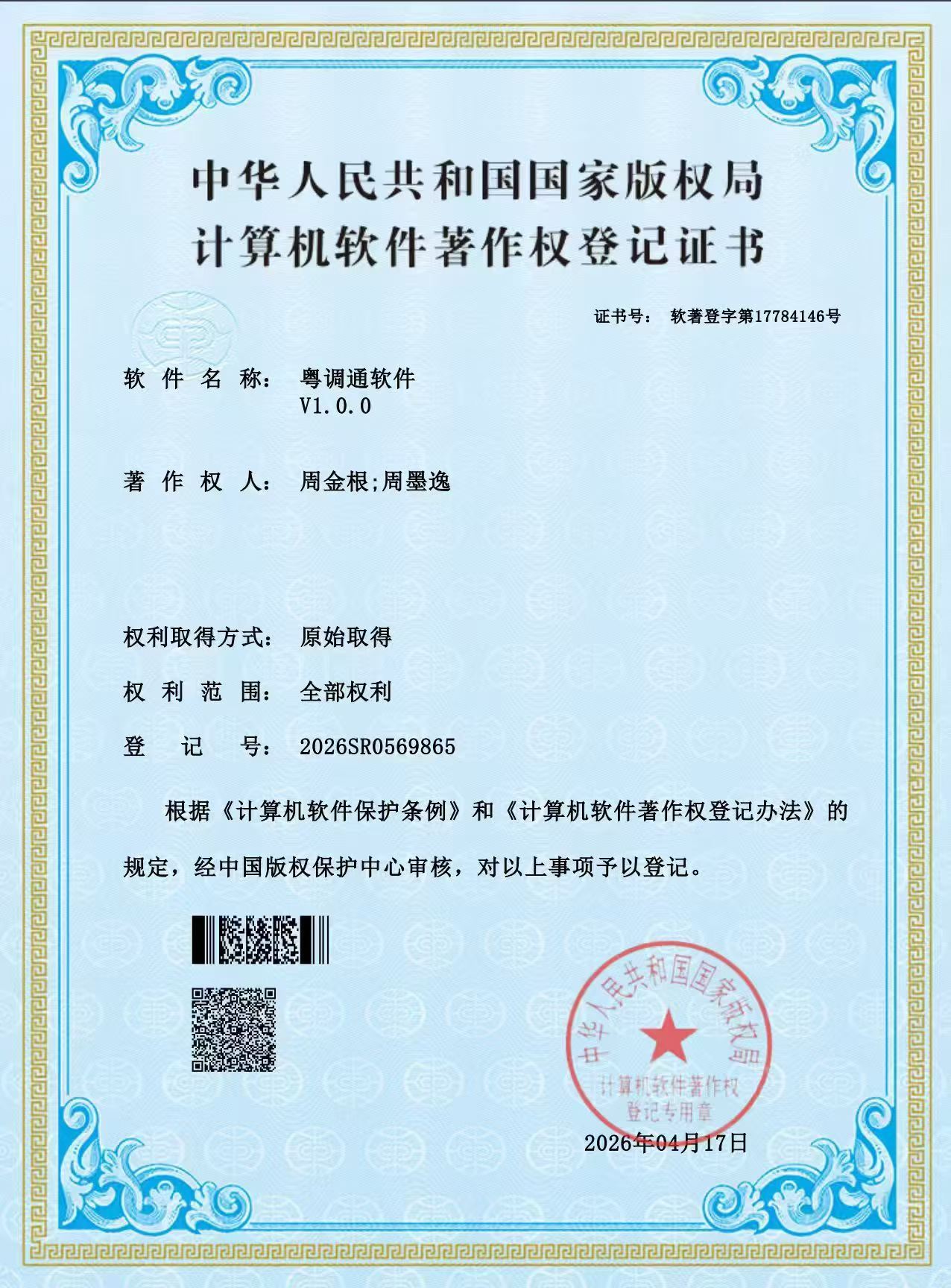
A Cantonese learning platform designed to help speakers master pronunciation, tones, and reading through interactive lessons.

Web App Cantonese Language Learning Interactive UI
Neihou Platform Screenshot

Overview

Cycle of Elements Screenshot

CantoGo is a comprehensive Cantonese learning platform built to help speakers master the language's unique pronunciation and tonal system. The platform provides interactive tools for learning Jyutping, the standard romanization system for Cantonese.

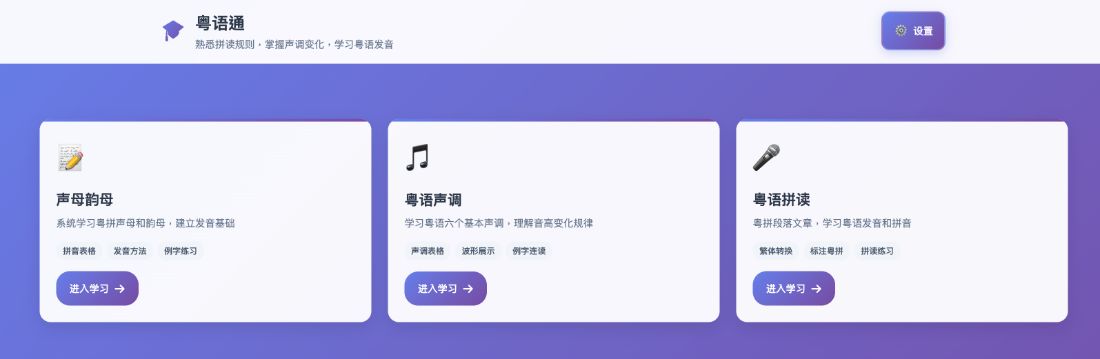
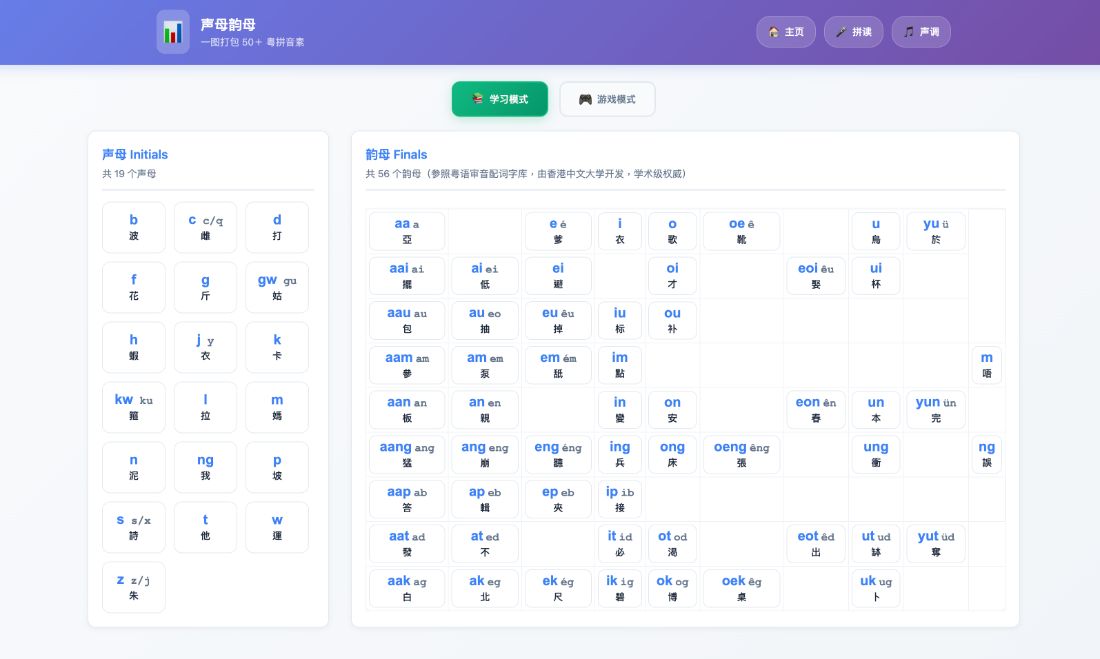
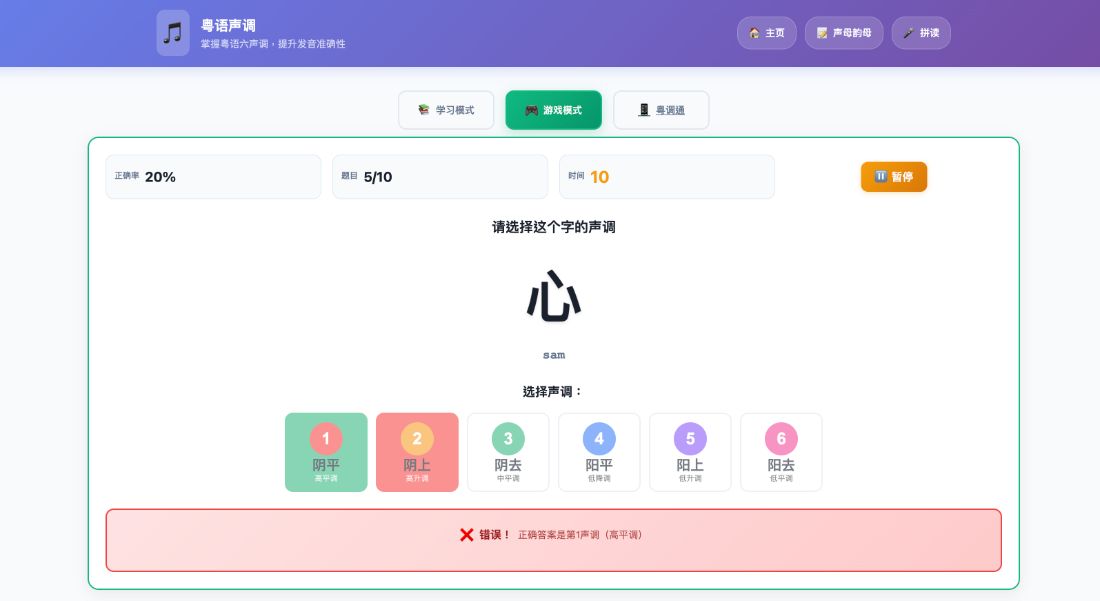
The platform features three core learning modules: Initials and Finals for building pronunciation foundations, Cantonese Tones for understanding pitch variations, and Cantonese Reading for practicing pronunciation through text passages.
Key Features

◈

Initials and Finals System

Systematic learning of Jyutping initials and finals with interactive tables, pronunciation guides, and example characters for practice.


Cycle of Elements Screenshot
◈

Tone Learning Module

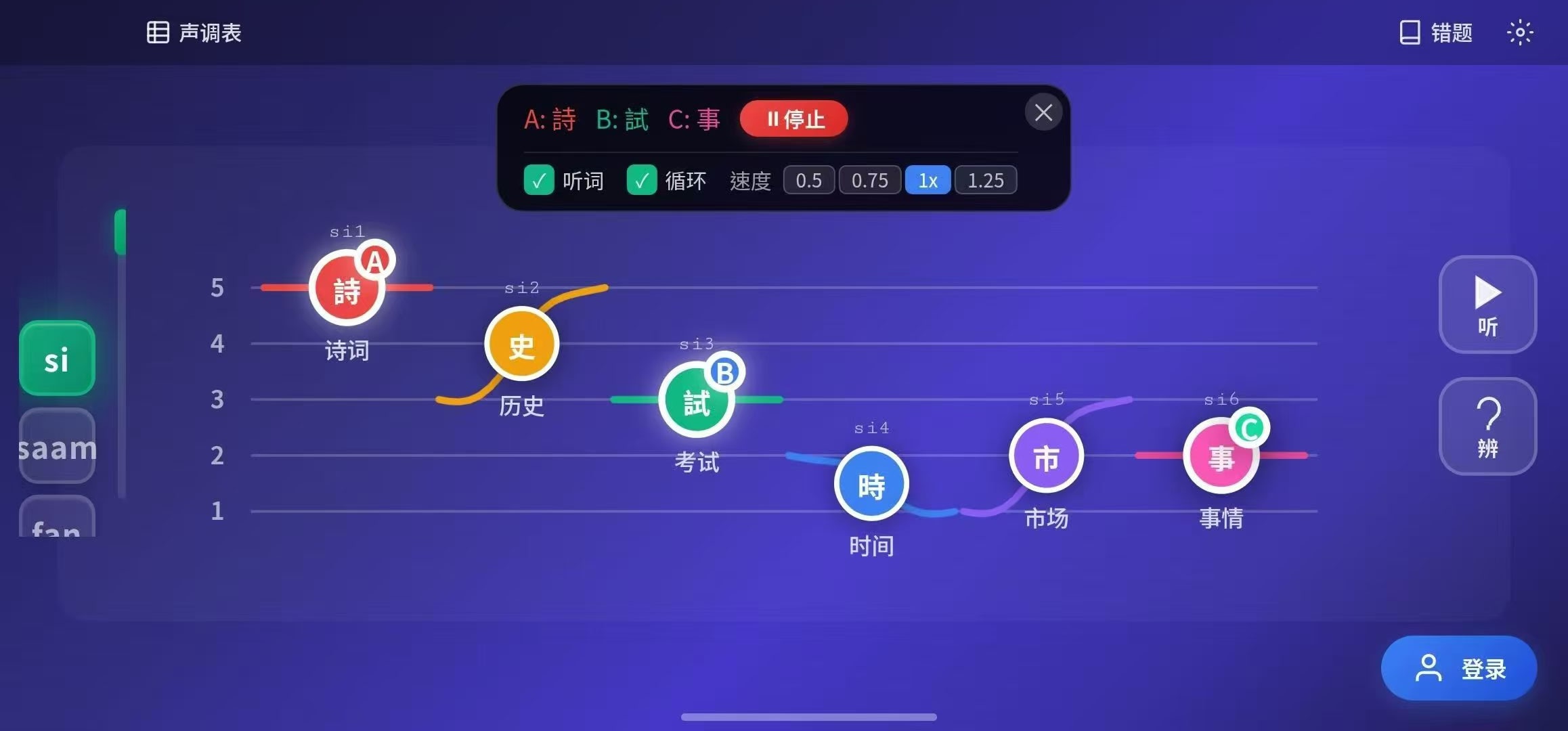
Visual representation of Cantonese's six basic tones with waveform displays and example character practice to master pitch variations.


Cycle of Elements Screenshot

To tackle the learning challenge of Cantonese's "nine tones and six contours," I also developed an app called ToneCanto, which uses innovative waveform visualization to make abstract tones visible, comparable, and easy to master.


Cycle of Elements Screenshot
◈

Reading Practice

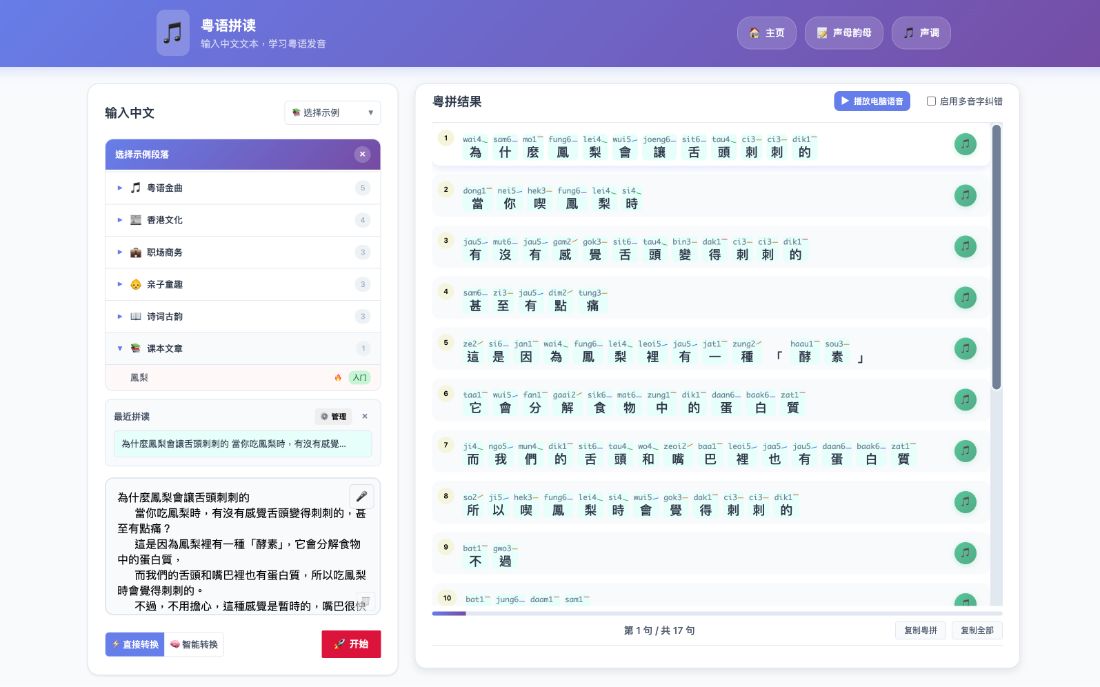
Text passages with automatic Jyutping annotation, traditional character conversion, and interactive reading exercises.


Cycle of Elements Screenshot

Background

This project was born from a personal need—helping my sister learn Cantonese to adapt to life in Hong Kong. Moving to a new city is challenging enough, but facing a language barrier makes it exponentially harder.

I wanted to build a practical tool that could make learning Cantonese more accessible and systematic. Instead of relying on scattered resources, learners can now access structured lessons on pronunciation, tones, and reading practice all in one place.

Working with my dad, we developed this platform as a family project. It combines technical implementation with real-world language learning needs, turning a personal challenge into a practical solution that can help others facing similar situations.

Technical Implementation

The platform is built with modern web technologies:

  • Frontend: Clean, responsive interface optimized for both desktop and mobile learning sessions
  • Interactive Elements: Dynamic tables, audio playback, and visual aids for tone representation
  • Data Management: Structured datasets for Jyutping initials, finals, tones, and example characters
  • Text Processing: Automatic Jyutping annotation and traditional character conversion

Why I Built This

Language learning tools often feel clinical and disconnected from real human needs. I wanted to build something that came from a genuine place—helping family adapt to a new environment.

Cantonese is particularly challenging for learners because of its tonal system and lack of standardized romanization resources. By creating a focused, systematic approach to learning Jyutping and tones, I hoped to lower the barrier to entry.

This project reinforced my belief that the best software solves real problems for real people. It's not about the fanciest tech stack—it's about understanding a need and building something that genuinely helps.