PRJ_007 // AI_COMPANION

Xueban

A multi-agent AI system designed to support adolescent mental health and learning growth through brain-science mechanisms.

Multi-Agent AI Mental Health WeChat Brain Science
War of the Ages Gameplay

Overview

War of the Ages Gameplay

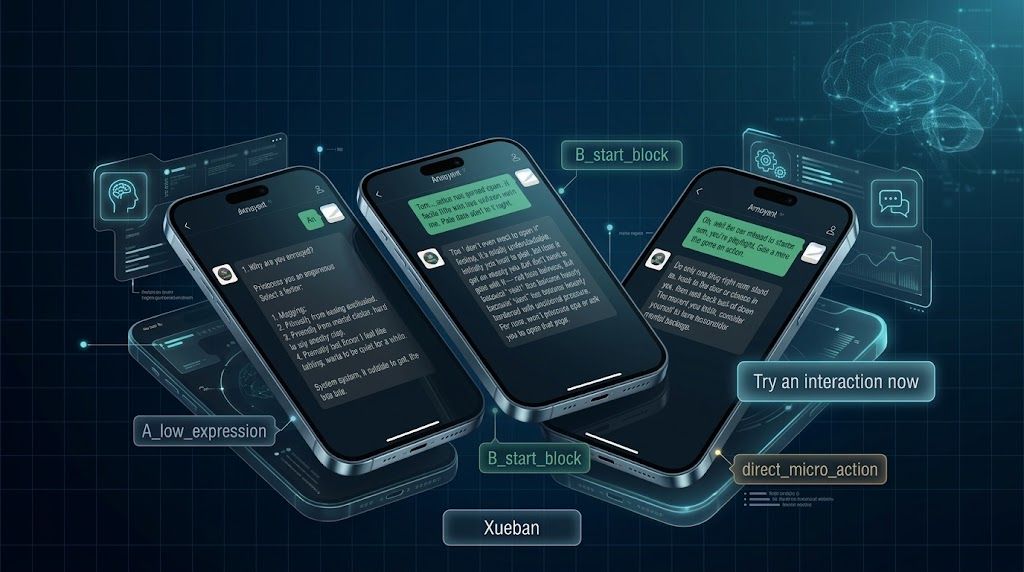
Xueban is a multi-agent AI system designed to support adolescent mental health and learning growth. It doesn't preach or pressure — it understands first, then acts.

Through 9 specialized AI agents working in concert, the system diagnoses learning blocks, tracks long-term emotional states, and delivers personalized micro-actions that teens can actually follow. Built on brain-science mechanisms (cognitive load, executive function, stress response) rather than generic motivational advice.
Why I Built This

War of the Ages Gameplay

This project was initiated as part of the 2026 Brain Science Innovation Challenge (Brain Challenge), where our team collaborated to design and develop an AI-powered solution for adolescent mental health support. The project ultimately won the Second Prize in the competition.

I built this because I noticed that many teenagers struggle to articulate what they're feeling — and most AI tools respond with generic advice instead of meeting them where they are. I wanted to design prompts that could understand the unspoken, and respond with empathy rather than instruction.

Primary responsibility

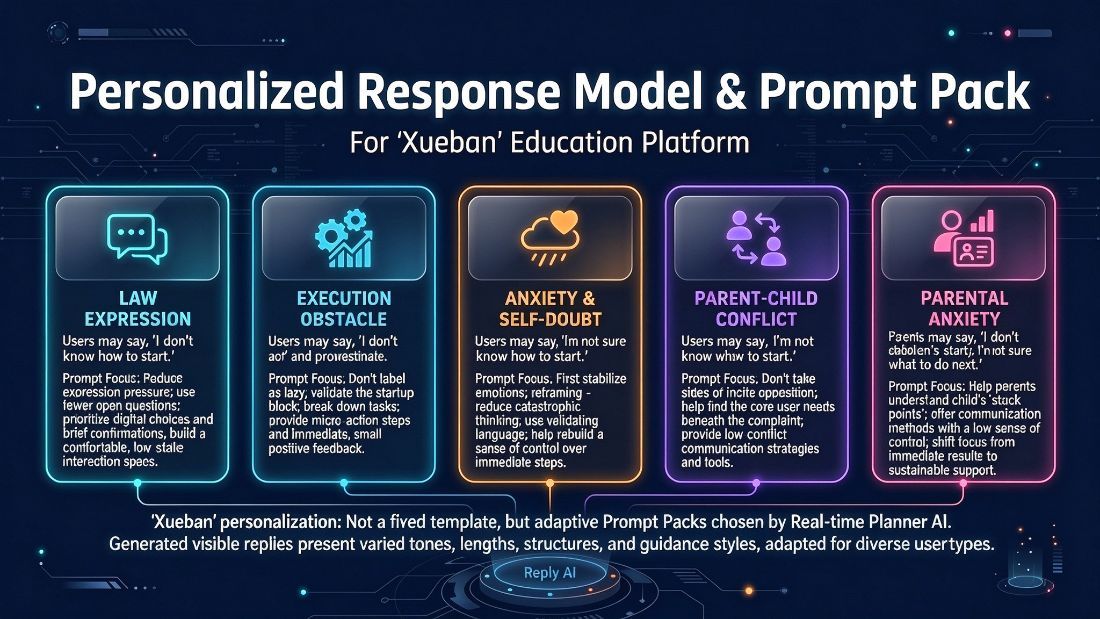
My primary responsibility was designing the Prompt Packs for LAW EXPRESSION user types — creating differentiated prompt strategies tailored to different user profiles and interaction scenarios.

Prompt Engineering User Research

Key Features

War of the Ages Gameplay
◈

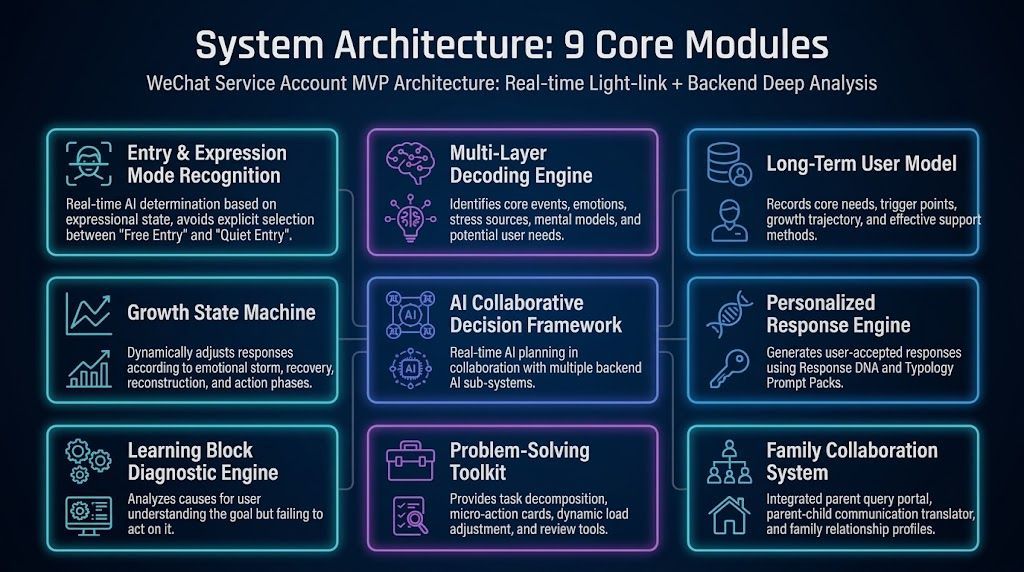
Multi-Agent Architecture

9 specialized AI agents including RealtimePlanner AI, StateJudge AI, ContextSummary AI, MemoryUpdate AI, and 5 ReplyAI variants for different user states.

◈

Growth State Machine

5 phases classification: Storm (Red) → Recovery (Yellow) → Rebuild (Blue) → Action (Green) → Altruism (Orange).

◈

Long-Term User Modeling

Tracks growth trajectory over months with Response DNA, trigger patterns, and personalized intervention strategies.

◈

9-Type Blockage Diagnosis

From "don't know how" to "resistance from being pushed" — precise diagnosis for targeted intervention.

System Architecture

5-Layer Architecture:

  • Layer 1 — User Interface: WeChat Service Account, Mini Program, Text/Voice Input
  • Layer 2 — Front-End AI: RealtimePlanner AI, 5× ReplyAI Agents, JSON Protocol
  • Layer 3 — Back-End AI: StateJudge AI, ContextSummary AI, MemoryUpdate AI
  • Layer 4 — Long-Term Memory: User Profile DB, Response DNA, Growth Trajectory, Session History
  • Layer 5 — Foundation Models: Qwen (Tongyi), DeepSeek, Prompt Engineering

Insights on Prompt Engineering

Although this project didn't involve the design and development of AI model modules, the practice of designing Prompt Packs gave me a deeper understanding of prompts:

PROMPT DESIGN Prompts are not just instructions for what AI should do — they are a structured encoding of domain knowledge, user intent, and output specifications. Xueban · Brain Challenge 2026

Designing differentiated Prompt Packs for different user types is essentially about user understanding and scenario adaptation, which aligns closely with the user persona and scenario-based thinking I learned during my internship as an AI Product Manager at NetEase.